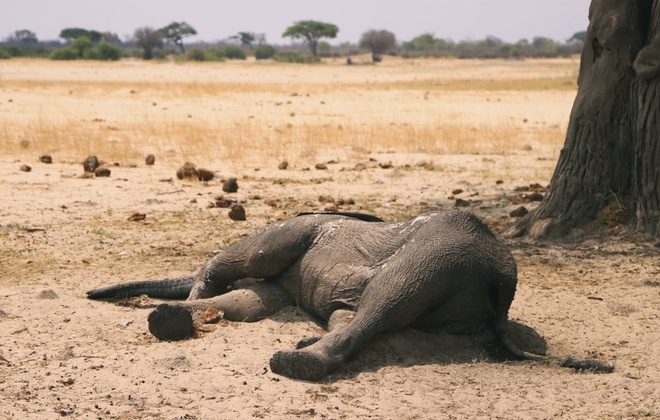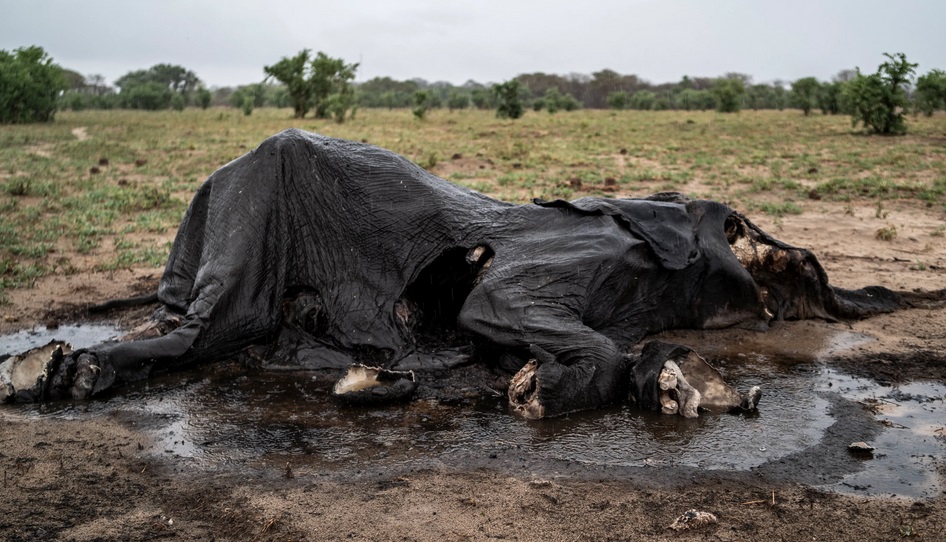
Amid a landscape of cracked, barren earth—once a lush green pasture during last year’s rainy season—a haunting scene was discovered: an adult elephant lying collapsed, its body desiccated after weeks without access to water. It stands as one of the starkest, most heartbreaking reminders of the devastating drought that has been sweeping through the region.
According to the forest rangers, the unfortunate elephant was found in an area where almost all natural waterholes had completely dried up. Deep fissures stretched across the ground for meters, trees in the vicinity had withered, and herds of wildlife had abandoned the area weeks earlier. But with his health failing, the elephant could not make the journey and collapsed on the parched land.
A drought of historic severity
Meteorologists report that the region is experiencing its most severe drought in decades, with record-breaking temperatures and a dramatic decline in rainfall. Rivers and streams have dried to their beds, pastures have turned to dust, forcing wildlife to travel greater distances in search of sustenance. For older or injured animals, the struggle for survival becomes almost impossible.
A cry for help from nature
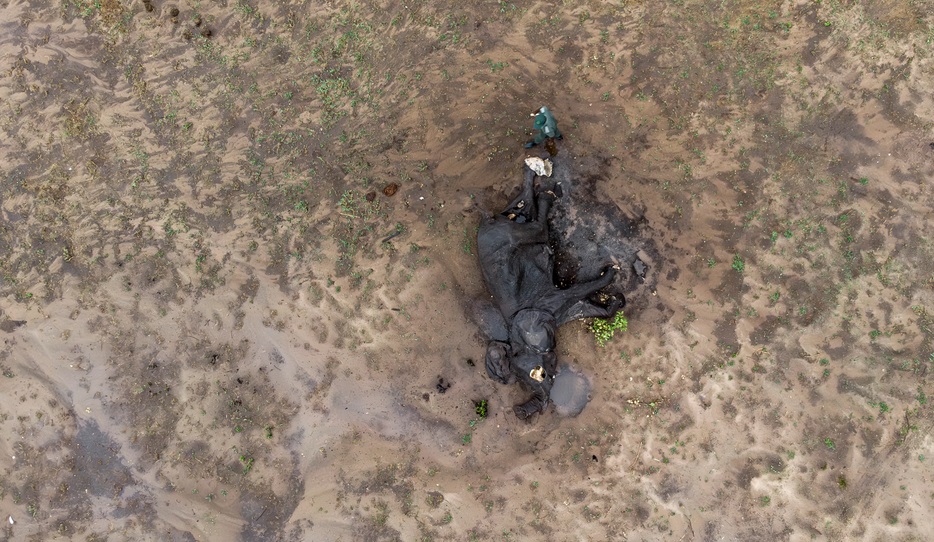
Images of the dried carcass quickly spread across social media, sparking an outpouring of sympathy and concern. Numerous wildlife conservation organizations spoke out, calling the incident a stark warning about the real and present impact of climate change and unsustainable resource management.
An environmental expert shared:
“When a creature that has long been a symbol of strength and resilience—like the elephant—collapses under the weight of extreme weather, we must understand that climate change is no longer a distant story.”
A call to action
Local authorities and conservation groups are urgently implementing temporary measures: drilling wells, transporting water to drought-stricken zones, and opening safe migration corridors for wildlife. But these are short-term solutions. The true answer lies in long-term environmental protection and climate mitigation.
The death of this elephant is not just the loss of a single animal—it is a grim reminder that if humanity does not act, nature will continue to pay the price. And in the end, we will not be exempt.