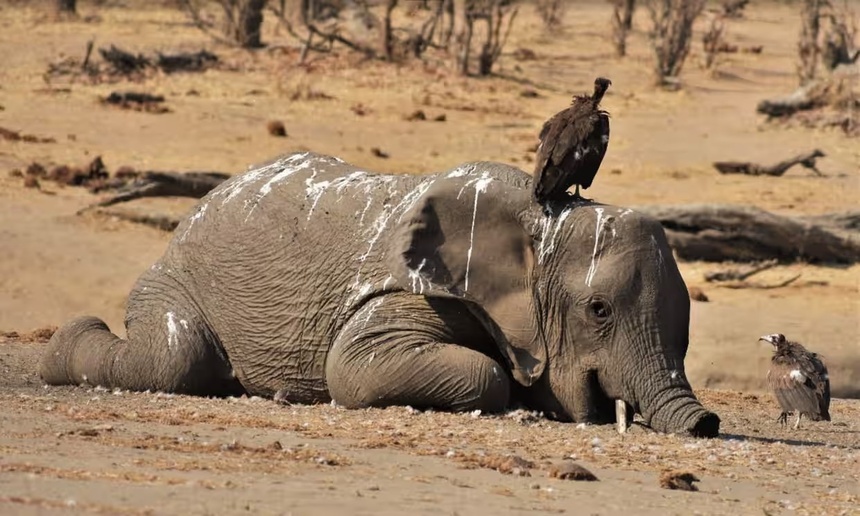
Over the past several months, regions across Botswana, Zimbabwe, Kenya, and Tanzania have witnessed an alarming number of elephant deaths—particularly within protected reserves and national parks. Conservation experts warn that the primary cause stems from prolonged drought, record-breaking temperatures, and the rapid depletion of fresh water sources.
Natural watering holes have dried up, and once-lush grasslands have turned into parched, barren earth. Elephants—creatures that require massive amounts of water and food daily—are now facing severe malnutrition. Many herds have been forced to travel hundreds of kilometers in search of water, but countless individuals, especially calves and older elephants, are unable to survive such grueling journeys.
Wildlife veterinarian Naledi Moyo in Zimbabwe expressed the heartbreaking reality:
“We are witnessing devastating moments. Elephants—icons of strength and endurance—are collapsing under the weight of climate change. This is a powerful wake-up call for all of us.”
Beyond the direct impacts of heat and water scarcity, climate change is rapidly altering ecosystems. The vegetation elephants rely on for sustenance is dwindling, while the prevalence of diseases and parasites is rising, placing even more pressure on already vulnerable populations.
International conservation organizations, including WWF and the Elephant Crisis Fund, have issued urgent appeals for action—ranging from providing artificial water sources and expanding ecological corridors to relocating elephants from the most extreme environments. They emphasize that without decisive measures to mitigate climate change, elephant populations in many regions could face collapse within the coming decades.
Climate change is no longer a distant concept—it is actively claiming the lives of some of Earth’s most magnificent creatures, and elephants are only one of countless victims.