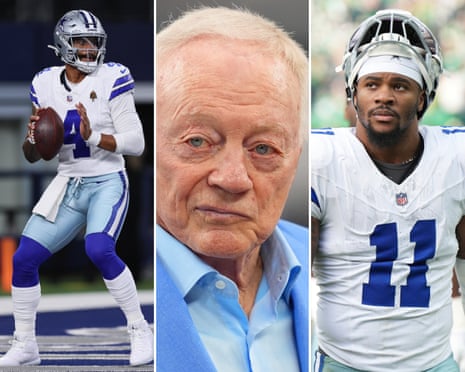
On Thursday night in Philadelphia, the Dallas Cowboys will stand on the sideline, helmets under their arms, while the Eagles raise a championship banner for the second time in seven years. It will be a ritual drenched in green and silver, an occasion of sweeping civic pride for one of the Cowboys’ fiercest rivals. For Dallas, it will be a reminder in 50ft letters: three decades have passed since America’s Team last won a Super Bowl.
And the contrast could not be sharper. For while the Eagles bask in another triumph and project the stability of an organization built for long-term success, the Cowboys stumble into the season diminished – having just traded away the one player who seemed capable of bridging the chasm between their glorious past and uncertain present.
Micah Parsons was not just Dallas’s best defensive player; he was one of the league’s few genuine game-wreckers, a two-time All-Pro edge who made quarterbacks rethink plays before the snap. Yet after a contract dispute spiraled into acrimony and commanded the pre-season news cycle, Jerry Jones traded Parsons to Green Bay last Thursday for two future first-round picks and defensive tackle Kenny Clark, a 29-year-old considered on the downside from his Pro Bowl peak.
Parsons immediately signed a four-year, $188m extension with the Packers, making him the highest-paid non-quarterback in NFL history. Jones insisted he’d offered even more guaranteed money – and Parsons’s agent, David Mulugheta, says the player’s first-choice was to stay in Dallas – but the squabble appears to have never really been about dollars. Jones had bypassed Mulugheta, trying to broker the deal one-on-one, as if his name and the star on the helmet were leverage enough. It wasn’t hardball so much as hubris: I’m Jerry, we’re the Cowboys, what more do you need? Parsons didn’t buy it, and now he’s gone.
“FLEECED” trended on X within minutes of the news. Packers general manager Brian Gutekunst called it “a big swing”, likening it to Green Bay’s historic free-agent coup of Reggie White. In Dallas, the shock was more existential. Parsons had been the most dynamic Cowboy since DeMarcus Ware; now he was playing for another NFC contender, the collateral damage in a beef between Jones and Mulugheta.
“I never wanted this chapter to end, but not everything was in my control,” Parsons wrote in a farewell message. “My heart has always been here, and still is.”
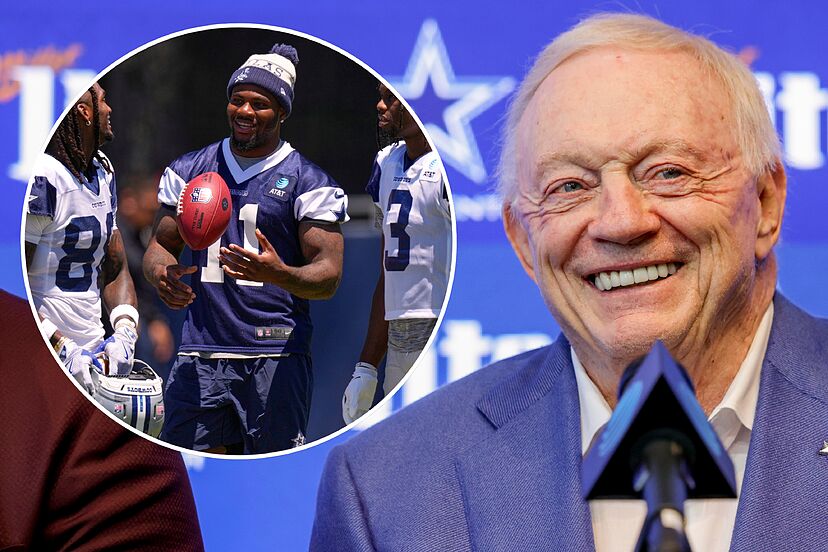
Jones, as ever, offered his own spin. He insisted Clark answered a “big concern” on run defense and compared the move to the Herschel Walker trade that had kickstarted the last Dallas dynasty in 1989. But the pitch didn’t land. Clark had been part of a Packers unit that finished in the bottom half of the league against the run last season. Dallas, with Parsons, had finished 28th in defense last year. Without him, they may soon redefine the floor.
It was, in other words, the Cowboys distilled: a headline-grabbing transaction with no clear path to a championship. Jerry called it progress. The rest of the NFL chalked it up as another episode in the longest-running soap opera in US sports.
That has been the Cowboys’ pattern ever since their last title. From 1970 to 1995 they were the NFL’s dominant force, appearing in 14 NFC Championship Games and winning five Lombardi Trophies. Since then? Not one return trip to the last four, marking the longest drought in the conference. They’ve had stars, hype and stretches of regular-season success, but every January ends the same way: with someone else lifting the trophy.
Over that span, there have always been whispers that Jones, the omnipresent owner and self-appointed general manager, prized the headlines as much as the wins. In the early years, he at least denied it. But last month, at a premiere event in Los Angeles for a Netflix docuseries about the Cowboys, the 82-year-old seemed to give away the game.
“I do believe if we’re not being looked at, then I’ll do my part to get us looked at,” Jones said. “The Cowboys are a soap opera 365 days a year. When it gets slow, I’ll stir it up. Oh, it’s wonderful to have the great athletes, have the great players, but there’s something more there: there’s sizzle, there’s emotion, and, if you will, there’s controversy. That controversy is good stuff in terms of keeping and having people’s attention.”
For the NFL’s broadcast partners, that may read like a mission statement. For Cowboys fans who have waited since Biggie and Tupac were still alive for another parade, it felt more like saying the quiet part out loud.