Maxwell Freed’s life has been defined by challenges few families ever expect to face. Diagnosed at a young age with SLC6A1, a rare and severe neurodevelopmental disorder, Maxwell struggled with seizures, developmental delays, and daily obstacles that made even simple tasks difficult. For years, his condition offered more questions than answers, leaving his family navigating an uncertain and often frightening future.
At the heart of Maxwell’s journey stands his mother, Amber Freed, whose relentless advocacy became the driving force behind a medical breakthrough. Refusing to accept that there were no viable treatment options, Amber dedicated herself to raising awareness, connecting with researchers, and pushing for innovation in gene therapy. Her determination helped accelerate research into SLC6A1, a condition long overlooked due to its rarity.
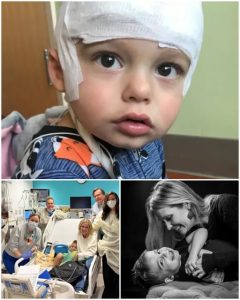
In 2025, history was made when Maxwell became the first patient in the world to receive a groundbreaking gene therapy treatment specifically targeting SLC6A1. The moment marked a turning point not only for Maxwell and his family, but also for countless other families affected by the disorder. While the treatment was not an instant cure, it opened the door to possibilities once thought unreachable.
Maxwell’s recovery has been measured in small but powerful milestones — fewer seizures, improved awareness, and moments of connection that once seemed impossible. Each step forward, no matter how modest, has been a victory celebrated with hope and gratitude. These changes stand as proof that progress in rare disease treatment often comes quietly, yet carries life-changing impact.
Today, Maxwell’s story continues to inspire families around the world who are facing similar battles. It is a testament to resilience, scientific courage, and the unwavering power of a mother’s love. More than a personal triumph, Maxwell Freed’s journey represents a beacon of hope — showing that even the rarest conditions can find answers when compassion, perseverance, and innovation come together.