Senate Crypto Questions Intensify as Jeff Merkley Presses Pam Bondi Over Trump-Linked Digital Asset Concerns
A tense exchange in Washington has once again placed cryptocurrency, political ethics, and executive accountability at the center of national debate. During a high-profile congressional hearing, Senator Jeff Merkley sharply questioned Attorney General Pam Bondi over concerns tied to digital asset activity connected to Donald Trump, raising broader questions about transparency, foreign influence, and how emerging financial systems intersect with political power. Reports from the hearing indicate that what began as a routine policy defense quickly evolved into one of the most closely watched moments in recent congressional oversight.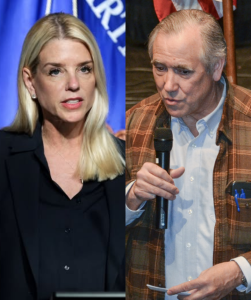
The hearing took place amid growing national attention on how cryptocurrencies are being used not only as investment tools but also as vehicles of political visibility and influence. In recent months, lawmakers from both parties have increasingly debated whether current financial disclosure rules are sufficient when elected officials, major donors, or politically connected figures are involved in digital assets whose ownership structures are difficult to track. That concern became more visible after several senators raised questions about whether digital token events linked to Trump-associated projects created opportunities for foreign participants to gain unusual access to political circles.
Merkley’s line of questioning focused on whether the Department of Justice had fully evaluated potential risks surrounding attendance at private events tied to token ownership and whether foreign investors participating in crypto-linked political gatherings had received appropriate scrutiny. According to reporting from the hearing, Merkley specifically asked whether foreign nationals connected to large crypto purchases could potentially influence policy conversations through financial participation in politically branded digital assets. Bondi responded by emphasizing that her appearance before the committee was centered on departmental priorities and budget oversight, while declining to directly engage with several hypotheticals raised during the exchange.
What drew particular attention was not only the substance of the questions, but also the tone in the room. Witnesses described a noticeable shift when Merkley introduced concerns that digital currencies tied to political branding may fall into legal gray areas not fully addressed by existing campaign finance or ethics law. Several committee observers noted that Bondi appeared increasingly cautious as the discussion moved away from technical budget issues and toward broader questions involving executive branch oversight. While no immediate legal findings emerged from the hearing, analysts say the exchange reflected a deeper unease inside Washington about how quickly crypto has moved from speculative finance into political controversy.
The larger national backdrop explains why this issue now carries unusual political weight. Cryptocurrency legislation has become one of the most actively debated financial topics in Congress, especially around stablecoin regulation, anti-money laundering protections, and conflict-of-interest safeguards for public officials. Senate committees have recently reviewed multiple amendments designed to strengthen ethics rules in digital asset legislation, including proposals intended to prevent federal officeholders from benefiting directly from crypto projects while policy decisions affecting the market are under consideration.
Financial experts say one of the central difficulties is that crypto markets move faster than regulatory frameworks. A token can attract millions of dollars in hours, involve buyers from multiple countries, and create significant financial visibility before regulators fully understand who controls the activity behind it. When political branding enters that space, oversight becomes even more complicated because traditional campaign law was built for donations, not decentralized digital ownership systems.
Bondi’s role in the hearing also reflected broader tension surrounding how the Justice Department should respond when policy questions intersect with politically sensitive financial activity. Critics argue that federal agencies must be ready to explain how they evaluate foreign exposure risks linked to digital assets. Supporters counter that many crypto-related questions remain speculative until direct evidence of wrongdoing appears.
Meanwhile, lawmakers across both parties continue pressing for clearer answers on whether digital financial influence should be regulated more aggressively when linked to national political figures. Some senators argue that current law leaves too many unanswered questions about transparency, while others warn against creating rules that could unintentionally slow innovation in one of the fastest-growing sectors of the economy.
The hearing did not produce immediate policy changes, but it succeeded in intensifying public attention around one unavoidable reality: digital assets are no longer just a financial issue. They now sit directly inside major debates about power, influence, access, and accountability in modern American politics.
As Congress prepares for additional hearings on digital asset regulation later this year, exchanges like this one may become increasingly important—not only because of who is speaking, but because of what those questions suggest about the future relationship between cryptocurrency and political authority in the United States.