Former Border Patrol Commander Greg Bovino is leaving his post with a statement that is rapidly igniting debate across the United States. As his retirement approaches, Bovino has made it clear he is not stepping away quietly. Instead, he is drawing attention to one of the most polarizing issues in modern American politics: immigration enforcement—and his own role in it.
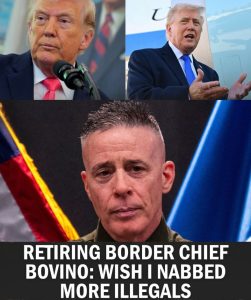
In a candid reflection on his career, Bovino admitted that his “only regret” was not detaining more undocumented immigrants during his tenure. The remark, blunt and unapologetic, has sparked a fierce reaction from both supporters and critics. For some, it reinforces the image of a hardline enforcer who prioritized border security above all else. For others, it raises troubling questions about the human cost of aggressive immigration policies.
Bovino’s career became especially prominent during the administration of Donald Trump, whose immigration crackdown reshaped federal enforcement priorities. As a senior figure within the U.S. Border Patrol, Bovino oversaw operations in multiple cities at a time when arrests and detentions surged. The administration’s zero-tolerance approach, including high-profile workplace raids and expanded detention efforts, placed officers like Bovino at the center of a national firestorm.
Now, as he reflects on those years, Bovino is not distancing himself from the policies that defined that era. On the contrary, he has defended them. He argues that strict enforcement was necessary to uphold the rule of law and deter illegal crossings. According to Bovino, failing to act decisively would have signaled weakness and encouraged further violations. His comments suggest he views his work not as controversial, but as incomplete.
Critics, however, see it very differently. Immigration advocates and civil rights groups have seized on Bovino’s statement as evidence of what they describe as a deeply flawed enforcement philosophy—one that prioritized numbers over nuance. They argue that the focus on detentions often overlooked humanitarian considerations, including the impact on families and communities. For these critics, Bovino’s regret is not that he did too little, but that the system itself allowed such an approach to flourish.
The reaction has extended beyond advocacy groups into the broader political arena. Lawmakers and commentators are once again clashing over the legacy of the Trump-era immigration strategy. Supporters maintain that the policies restored order at the border and sent a clear message about U.S. sovereignty. Opponents counter that they eroded trust, strained resources, and left lasting scars on vulnerable populations.
Bovino’s remarks have also reignited a deeper conversation about how success is measured in immigration enforcement. Is it the number of arrests? The reduction in border crossings? Or should it include broader metrics such as community impact and long-term integration? These questions, long debated in policy circles, are now being revisited in the public sphere with renewed intensity.
For many Americans, the controversy underscores how unresolved the immigration debate remains. Years after the peak of the Trump administration’s crackdown, the country is still grappling with its consequences. Border security continues to be a defining political issue, shaping elections, influencing legislation, and dividing public opinion.
As Bovino prepares to step away from his role, his words ensure that his influence will linger. Whether viewed as a dedicated officer who upheld his duty or as a symbol of a controversial era, he has once again brought the nation’s attention back to a deeply contentious topic. His final reflection is not just a personal statement—it is a spark that has reignited one of America’s most enduring and emotionally charged debates.
In the end, Bovino’s legacy may not be defined solely by the actions he took, but by the conversation he leaves behind. A conversation that continues to evolve, driven by competing visions of law, justice, and humanity at the border.