The relationship between former Chairman of the Joint Chiefs of Staff Mark Milley and former President Donald Trump remains one of the most closely examined civil-military tensions in modern American political history. What began as private disagreements during the final phase of Trump’s presidency eventually became a highly public conflict involving accusations, constitutional arguments, and sharp disagreement over where military duty begins and personal political loyalty must end.
Public attention returned strongly after Milley delivered his farewell remarks at Arlington during the closing period of his military service. His speech did not mention Trump directly, yet several lines were immediately interpreted as a clear defense of democratic principles during a time of political strain. Milley emphasized that members of the United States military swear an oath to the Constitution, not to an individual leader, a message many observers viewed as unusually direct coming from one of the nation’s highest-ranking military officials.
That message carried weight because it followed years of visible friction between Milley and Trump. During Trump’s presidency, Milley often found himself at the center of debates over military posture, public symbolism, and crisis management. His role became especially controversial during the final months of the administration, when reports emerged that he had spoken with Chinese military officials to reassure them that the United States was stable during a period of heightened uncertainty after the 2020 election.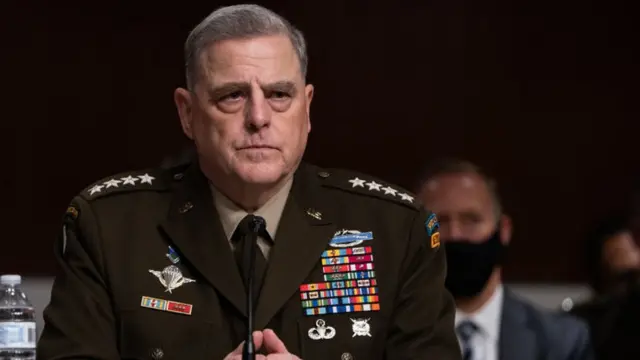
Those calls became a major political flashpoint. Trump and several allies argued that such contact was inappropriate and raised questions about military boundaries. Trump later described Milley’s actions in harsh terms, accusing him publicly of conduct that, in his view, crossed lines of acceptable military behavior.
Milley, however, consistently defended the conversations. He stated that the communications were coordinated through proper channels and intended to reduce the risk of miscalculation between two nuclear powers during a highly sensitive political period. According to his explanation, maintaining clear military communication in moments of uncertainty is part of strategic responsibility, not political interference.
This difference in interpretation reveals a deeper American debate that extends beyond two individuals. At its core is the question of how military leaders should act when political institutions experience unusual strain. In the United States system, the president serves as commander in chief, but military leaders are also expected to reject unlawful orders and protect constitutional structure.
That balance has always existed, but rarely does it become so publicly visible.
For many legal scholars and defense analysts, Milley’s farewell speech mattered because it reaffirmed a principle often discussed in theory but less often stated directly by senior officers: military service belongs to constitutional order rather than personal authority.
The symbolism of Arlington also amplified the message. A speech delivered in a setting associated with sacrifice, military continuity, and national memory naturally carries deeper meaning than an ordinary public statement.
At the same time, Trump supporters viewed Milley’s public tone differently. Some argued that senior military leaders should remain more restrained in how they frame political tensions, especially when their remarks can be interpreted as criticism of an elected president.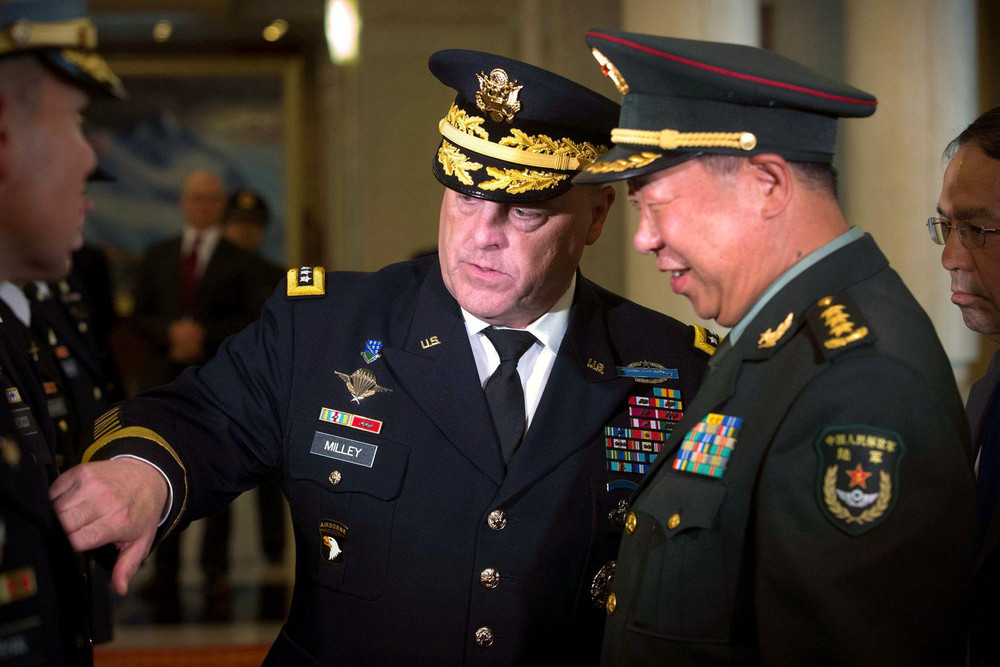
This disagreement reflects how civil-military language now operates inside a far more polarized political environment than in earlier eras. Statements once treated as institutional now often become partisan within hours.
Milley’s own career makes the situation even more notable. He served across multiple administrations and held one of the most demanding military leadership roles during a period marked by global uncertainty, domestic protest, and international strategic rivalry.
His public insistence on constitutional duty therefore carried not only symbolic weight but also personal credibility built over decades of service.
The Trump-Milley conflict also continues to matter because it represents a larger concern many Americans still debate: how democratic systems maintain boundaries when institutions are pressured by personal political conflict.
Even after both men left their formal roles in that chapter of government, the questions raised by their confrontation remain active.
What should military leaders do when political language becomes volatile? How publicly should they explain sensitive decisions? Where does institutional loyalty become visible resistance?
These questions explain why every new reference to the Trump-Milley relationship still attracts national attention.
More than a personal clash, it has become part of a broader conversation about power, restraint, and the unwritten expectations that hold democratic institutions together when tested most severely.