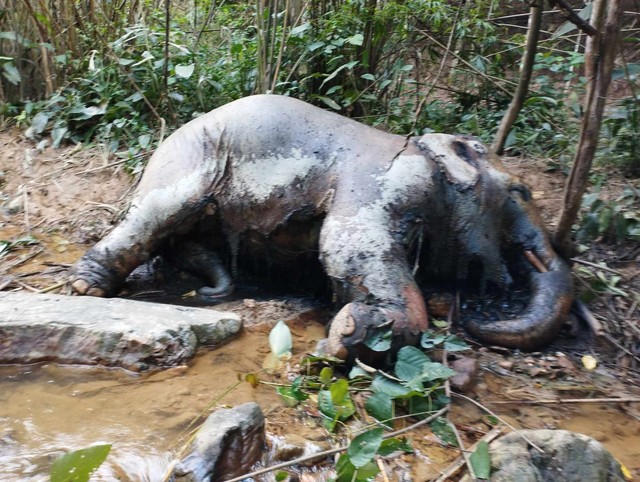
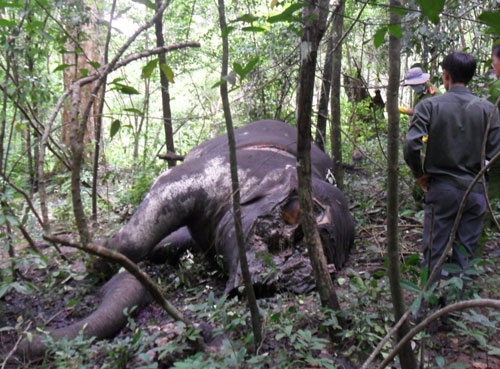
A heartbreaking incident was recently recorded in Bù Đăng District, Bình Phước Province: a wild elephant was found dead in a rubber plantation after stepping on a hunting trap. The elephant’s body, already in the early stages of decomposition, was discovered by local residents lying motionless among rows of rubber trees, with one leg severely crushed by a steel snare.
According to a report from the Bình Phước Provincial Forest Protection Department, the elephant belonged to a migratory herd that moves between the border areas of Bình Phước and Đắk Nông provinces. It was estimated to be around 30 years old and weighed over 3 tons. Tracks and signs at the scene suggested that the injured elephant had desperately dragged itself a long distance before finally collapsing from exhaustion.
Environmental experts believe that the continued shrinking of natural forests—cleared for industrial and agricultural expansion, such as rubber, pepper, and cashew plantations—has driven elephants out of their native habitats. With diminishing food sources and living space, elephant herds are being forced to venture into human-developed areas, where they face deadly threats like traps, electric fences, and human conflict.
A Warning to Humanity:
The death of a single elephant is not just the loss of one animal—it is a stark indicator of the escalating ecological crisis in many regions. When a creature as massive and intelligent as an elephant—long revered as a symbol of resilience and wisdom—can be killed by a primitive trap in a man-made forest, it is time for humanity to ask: are we truly living in harmony with nature, or are we slowly driving it toward extinction?
Unless swift and decisive action is taken by both authorities and local communities, tragedies like this will continue to occur. And one day, the sound of elephants trumpeting may exist only in memory—serving as a painful reminder of what humanity has allowed to vanish.